Tuesday, April 3, 2018

The Financial Benefits of Workplace Safety

The Financial Benefits of Workplace Safety

Image source: http://resources.eln.io/wp-content/uploads/2016/03/Health-and-Safety-690x430.png

The Financial Benefits of Workplace Safety

More Profits from Controlled Hazards

Preventing injuries, illness, and operational loses is good business sense. To be successful requires communication from the top to bottom and vice versa. Health and safety in the simplest sense is constant communication on bettering a particular process.

Workplace accidents and injuries can be prevented. Businesses that have taken the initiative to protect themselves from accidents have half the injury rates than their competitors that have not. Businesses that have implemented effective health and safety programs not just for wanting safer workplaces, but also they want to:
1) lower costs
2) improve employee relations and even trust
3) improve productivity
4) improve protection of business from down time due to injured workers
5) improve customer relations

All organizations can operate more safely. Some businesses operate safer than others; these businesses maintain safety standards. Safe operation is not left to chance. These businesses have implemented proactive, and not reactive, health and safety programs. These same businesses will also be more profitable, more innovative, and lead their competitors in their fields.

Injuries cause pain and suffering and impacts the family and friends of the injured. Liability issues can also affect the employer if it has been found that not every precaution reasonable was taken to protect the employee. Financially, many sales will have to be made to overcome the costs of an injury. The average claim can cost a business $68,000.

Unseen hazards or risk can have a potential for catastrophe. Hazards that can lead to a fatality can put a small and even a mid-sized company out of business. These hazards can come in the form of fire, explosion, exposure to harmful materials, falls, and being caught in moving equipment. These hazards must be identified and controlled by a written process.

Written processes will educate the employee and even the employer of the hazards in the workplace and what needs to be done to insure safe operation. "Don't run with scissors in your hand," is a safety process that has been handed down through generations.

Once written, safety processes are not written in stone. Take the example above, improving this process would lead to a statement such as: "While carrying scissors carry them with tip pointed down, and away from your body."

It is important to constantly look at the safety processes to make sure they are the best they can be. Once a month or when a question arises should suffice. Health and safety programs are not meant to stop a business from running properly; it is meant to help make them run more efficient. Health and safety programs should be viewed as a foundation asset of the business.

Businesses that achieve lower injury rates have a working health and safety program in place. They have made safe operation a business objective and these businesses have also a more profitable bottom-line.

Monday, April 2, 2018

The Direct Public Offering Using a Form S-1 Registration Statement

The Direct Public Offering Using a Form S-1 Registration Statement

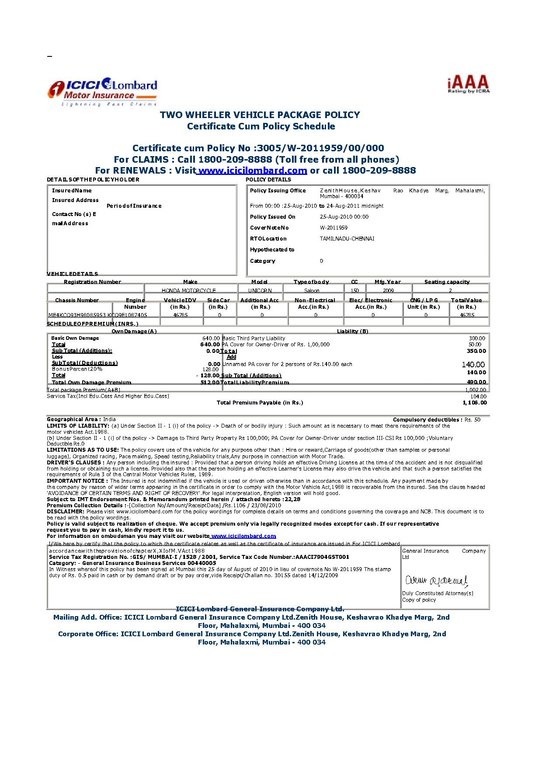
Image source: https://upload.wikimedia.org/wikipedia/commons/thumb/f/f2/Vehicle_Insurance_Certificate_in_India.pdf/page1-542px-Vehicle_Insurance_Certificate_in_India.pdf.jpg

The Direct Public Offering Using a Form S-1 Registration Statement

A direct public offering ("Direct Public Offering") allows an issuer to sell its shares directly to investors. The Direct Public Offering involves registering securities with the Securities and Exchange Commission ("SEC") on a Form S-1 ("S-1") Registration Statement either on its own behalf in a primary offering or on behalf of its selling security holders in a secondary offering. All issuers qualify to register securities on Form S-1 and issuers who conduct direct public offerings often register their securities on Form S-1.which eliminates many of risks and expenses associated with reverse mergers and public shell companies including DTC Chills, Globa Locks and SEC trading suspensions.

Initial Public Offering

An initial public offering ("IPO") is where an investment banking firm assists an issuer with raising funds by selling securities that have been registered under the Securities Act of 1933, as amended (the "Securities Act"). Many issuers will not meet the income, asset, revenue or capital requirement standards that investment banking firms now have and will go public without the use of an underwriter.

Direct Public Offering

A Direct Public Offering ("Direct Public Offering") involves an issuer filing a registration statement with the SEC, typically on Form S-1 ("S-1) that registers shares from the issuer's treasury. Once the SEC declares the registration statement effective, the issuer then sells the registered securities directly to investors without the use of an underwriter.

SEC Review

After the issuer files the registration statement it is then subject to review by the SEC. After review of the registration statement the SEC may render comments which the issuer will address by filing amendments to its registration statement. When all of the SEC comments have been answered to the satisfaction of the SEC, it will declare the registration statement effective.

Getting a Ticker Symbol

Filing an S-1 registration statement under any of the above methods will not cause an issuer's securities to become publicly traded and it will not result in the assignment of a ticker symbol. After satisfying all the requirements of the SEC, the issuer then must comply with the requirements of the Financial Industry Regulatory Authority ("FINRA"), in order to obtain its ticker symbol.

Rule 15c211 and Establishing an Active Market

Generally, FINRA requires that the issuer have at least 25 shareholders who hold either registered shares or with respect to Pink Sheet listed issuers, shares that have been held by non-affiliate investors for twelve months. The majority of the 25 holders must have paid cash consideration for their shares. Additionally, these shares in the aggregate should represent at least 10% of the issuer's outstanding securities and are often referred to as the "Float." The Float must also be somewhat evenly distributed without significant concentration in one or a few shareholders. FINRA requires the issuers to locate a sponsoring market maker to file a Form 211 ("211"). For issuers who are non-reporting, audited financial statements are not required in order to file a 211. After the sponsoring market maker files a 211, FINRA reviews the 211 and provides comments for the sponsor to address. Upon receipt of confirmation that all comments have been answered satisfactorily, a ticker symbol is assigned and the issuers' securities are publicly traded.

By undertaking a Direct Public Offering, the issuer avoids many of the expenses and risk associated with reverse merger transactions. Reverse mergers are rarely done properly and have therefore become vehicles of fraud. Shell companies often have incomplete and sloppy records, pending lawsuits and other liabilities including securities violations. A common misconception exists that a reverse merger is a fast and certain method of becoming publicly traded. If proper due diligence is undertaken more often than not, the shell company will not pass scrutiny of a qualified SEC lawyer. Both FINRA and the SEC recently passed new requirements which create new hurdles issuers who engage in reverse mergers with public shell companies.

Upon completion of the reverse merger, under recently passed Rule 6490, the issuer is subject to a full review by FINRA which generally takes at least 30 days. FINRA has complete discretion of whether to approve corporate changes related to reverse mergers. Issuers going public direct with a Direct Public Offering have fewer hurdles to obtaining electronic trading from Depository Trust Company ("DTC"). Reverse merger companies often encounter DTC chills and global locks because of prior unregistered securities issuances and the public shells prior management. Owners of private companies are learning the hard way that reverse mergers can be a costly mistake. In reality, it is quicker and more cost effective to undertake a Direct Public Offering than to do a reverse merger.

The Connection Between The Commercial Loan Review And Loan Modification

The Connection Between The Commercial Loan Review And Loan Modification

Image source: http://aerie.wingdreams.net/aglo39nkgacg/armips/attachment/subset/oklahomabankruptsylawsandpaydayloans.png

The Connection Between The Commercial Loan Review And Loan Modification

The commercial loan review has opposite meanings for the the borrower and the lender when they are preparing to negotiate for a "restructuring of the debt". The loan workout is supported by financial regulators, such as the Federal Deposit Insurance Corporation (FDIC) and the Federal Reserve, because they realize that this kind of deal will be beneficial for both parties.

The bank regulators believe that the situations of many of the troubled commercial borrowers are only temporary and that they really want to continue with the payments but the circumstances are preventing them from doing it. They also realize that offering the borrowers a chance to recover would benefit the banks and the economy in the end. Naturally, the regulators also pointed out that even if they have expressed their support for restructuring the loans, this does not mean that the lenders will disregard the basic rules for assessing risks and approve all applications. It would not benefit anyone if a commercial loan modification is provided to a business that has lost its viability and when the foreclosure is unavoidable.

Basically, what the bank regulators are suggesting that banks should do is to expand their creativity when trying to look for ways to help the businesses that still have a chance of surviving the crisis. This is where the commercial loan review becomes important. This is the method of appraising the capability of the property owner to come up with the modified mortgage payments. Some of the factors that the lenders have to consider include the payment history, the flow of cash into the business, the availability of guarantors that can take over if the borrower fails to pay, and the condition of the market. Thus, the commercial loan review will have a vital role in the decision making of the bank for or against the loan workout.

However, for the borrower, the commercial loan review is something that is usually done by a loss mitigation expert or consultant. This activity will focus on the original loan agreement because experts have discovered that 80 percent of the loans that were released for commercial properties during the prosperous years in real estate contained flaws. These flaws are transgressions against the laws and regulations that have been put in place to protect the borrowers from the abusive practices of some lenders. The point is that the corresponding penalties for these flaws are usually severe, such as requiring the lender to return to the property owner all interests that have been paid since the beginning of the mortgage. Moreover, the bank would not be able to apply any of the provisions contained in the original agreement and this includes repossession or foreclosure of the property. Hence, the borrower would have a strong negotiating position if such violations are discovered in the loan documents.

The presence of such violations will also be helpful for the borrower if the foreclosure proceedings have already started. The court will freeze the proceedings until such time that a decision has been made regarding these accusations. The commercial loan review is therefore a very potent weapon for the property owner in convincing the lender to grant a loan workout.

The bridge cambodia

The bridge cambodia

Image source: http://www.investphnompenh.com/wp-content/uploads/2016/09/the-bridge-cambodia-oxley-construction-update-august-2016.jpg

The bridge cambodia

Cambodia has emerged as being an attractive new place for foreign investors desiring to diversify their construction bases and connection a fast-growing native market. Although infrastructure holds underdeveloped and any legal system is certainly inefficient, Thai companies just might discover that Cambodia gives you some unique pros.

Cambodia is amongst Asia's most liberalised financial systems, with very couple limitations on unfamiliar businesses. Infrastructure is reasonably adequate, and illnesses for exporters happen to be favourable. Its get and natural solutions are abundant, together with wages are decreased (although expanding). Exporters to Europe and the country benefit from preferential tariff treatment within Generalised System for Preferences (GSP). And forex trading risk is moderate because of the economy is principally "dollarised".

The economy has grew fast during the past several years, at more than 8% each and every year from 2004 that will 2012, according into the World Bank. The ongoing build boom in Phnom Penh could sustain growth together with boost consumption for many years. The economy is certainly gradually transitioning in purely based regarding agriculture and low-cost, light manufacturing toward one gains strength together with stability from large domestic consumption.

Cambodia's rules and government coverage welcome foreign option traders, giving them similar rights and treatment plans as local enterprises. In order to better support foreign financial commitment, the Ministry for Commerce (MoC) and also Council for any Development of Cambodia (CDC) have consolidated a lot of their governmental functions to present one-stop service.

Any MoC deals for the most part with company registrations. But foreign investment strategies that involve processing or exports at the same time require approval by way of the CDC, which is reviewing a project take into account whether it suits the criteria for that "Qualified Investment Project" (QIP).

Whenever approved, a QIP is entitled to various investment incentives say for example low 20% commercial tax rate, three-year tax bill holiday, 40% downgrading rate for concrete assets, exemption for customs duties together with repatriation of proceeds.

Unlike most for its neighbours, Cambodia allows for 100% foreign possession, except for get. As a member of Asean, Cambodia may be a party to any Asean Comprehensive Financial commitment Agreement (ACIA), which unfortunately protects foreign financial commitment rights and real estate.

Over the past 2 whole decades, Cambodia has chiefly attracted investment during labour-intensive manufacturing, which include garments and construction of elementary sections for shipment that will final-stage assembly factories in Thailand together with Vietnam. Cambodia's deep-sea opening in Sihanoukville provides the means to access regional shipping passages.

Agriculture and tourism have also long been among the Cambodia's growth sites. The recent boom in property enhancement and construction will sustain the best pace of expansion for many years and generate career advancement in building substances and household commodities. Consumption and any retail sector are gaining an even bigger and bigger share within the nation's economic quiche.

As for any legal environment, Cambodia's judicial system has three important levels, starting within the municipal level, above that can be appeals courts and also Supreme Court. But disputes not anymore need to mainly be settled by just court, because individuals and companies provide the right to arbitration. This is a comparatively new legal theory in Cambodia, yet, and is right now facilitated by judges or, in exceptional cases, by governing administration ministries.

Note that arbitration should be binding when together disputing parties own previously signed a good contract agreeing to a decision by just arbitration. Investors should guantee that any contract consists of a clause allowing meant for "international arbitration", which unfortunately Cambodian courts could recognise.

Nevertheless, Cambodia's judicial process have been plagued by inefficiency and scarcity of expertise in financial matters. Most cases often be litigated in Phnom Penh's municipal court, which is certainly understaffed. Companies that use in Cambodia need be prepared to control the challenges for handling legal counts under these occasions.

One important point could be to spell out terms and conditions clearly in plans, because under the existing legal framework any courts are obliged to recognise contractual agreements.

Cambodia offers business opportunities in sectors which include manufacturing, agribusiness, holidays, logistics, retailing together with property. But a foreign investor is required to consider whether the existing infrastructure system is adequate for that specific project. One railroad line in operation runs between Phnom Penh together with Sihanoukville. Air transport too is bound. Public utility costs rank among the many highest in Asean, and it is lenient with question whether Cambodia has got sufficient energy equipment and energy secureness to sustain its growth over the years.

There are twenty-three Special Economic Specific zones in nine main provinces, with enhanced infrastructure together with other advantages. But only five within the SEZs are doing work, in the provinces for Kandal, Svay Rieng together with Sihanoukville. Various world organisations have made available Cambodia with enhancement aid, but too little of policy coordination within the national level has leaded to the delay or simply abandonment of public projects using sectors including mass fast transit and electrical power.

Development of infrastructure may be a business opportunity over the years, but first the government needs to confirm long-term policy desired goals and demonstrate good commitment. Meanwhile, the readiness for public infrastructure remains among the many top constraints to doing business in Cambodia, as per 2013 World Market Forum (WEF) united states report, which at the same time cited government corruption, bureaucratic inefficiency and too little of skilled labour.

However , despite these questions, Cambodia is these days, and will are nevertheless, one of one of the best places for Thai businesses to put. As Cambodia variations ahead on a path of market development and modernisation, Thai companies should evaluate the opportunities. to know more just visit this link http://www.oxley-thebridge.com/

Sunday, April 1, 2018

The Benefits of Setting Financial Goals

The Benefits of Setting Financial Goals

Image source: http://www.takeasmartstep.com/wp-content/uploads/benefits-of-a-financial-goal.png

The Benefits of Setting Financial Goals

If you don't know how much you are saving or when you will be able to retire, it's time to look at the benefits of setting financial goals. It's important to look at what your future plans are, how much you can contribute to them, and how you plan to manage and grow your wealth. By working with a financial advisor to formulate a plan, you can be secure in the knowledge that your investments are growing appropriately and that you will be able to retire comfortably when you are ready.

Financial Goals in a Tough Economy

The economy is tough right now, and many people are cutting back on their savings and investments. At the same time, with stock prices dropping, many stocks and funds can be had for a very low cost. While no one can guarantee that they will rise in price, a qualified financial advisor can help you to determine you best bets. No matter how much cash you can spare these days, there are investments that you can make that will put your future in good stead. The benefits of setting financial goals don't have to go by the wayside when times are tough. Now, more than ever, you need to stick to your plan.

Visualizing the Financial Future

Now that we are discussing money, what are your goals? Do you want to retire in ten years? Do you have kids to put through college? Do you want to keep working but have the funds to take extensive vacations? No matter what financial goals you have, they take money, and for most of us, that means planning. One of the benefits of setting financial goals is knowing how much to set aside and how to grow it to meet your these goals. Planning how you see your future, however, is the first step.

Another important benefit of setting financial goals is that you get to reevaluate them. As time goes on your needs may change. You may love your job and not want to retire. Your daughter may have a full ride scholarship, and you won't have to pay for college. Your parents may need extra assistance in their golden years that you hadn't counted on. Life is always changing, and your financial plan should be flexible, as well.

Reassessing your goals means reassessing your investments, too. Riskier investments can pay off if you have a long time to grow a return, for example, but if you need a steady, reliable source of income, they may not be the best option. By reassessing your investments along with your goals you can make sure you are on the right track.

Moving Forward to Financial Success

There are many benefits to setting financial goals. You can plan for your future and ensure you'll have the security to retire when you want to. You can also reassess your goals and investments to make sure the plan for each is still what you need.

Along the way, it might be best to get some help from a qualified financial advisor to know for certain that you've made the best investments you can for your wealth. Life changes, and so should your planbut if you account for this, you can make your goals work for you.

The 17 Miracle Prayer Points That Make You Rich

The 17 Miracle Prayer Points That Make You Rich

Image source: http://images.techhive.com/images/article/2016/01/4_tandemlaunch-100637695-orig.jpg

The 17 Miracle Prayer Points That Make You Rich

Someone asked me the other day what was the most effective prayer point to pray and become wealthy.

I did some digging around and found out that the most powerful prayer points for wealth are the ones prayed by one of our partners over 5 years ago.

He wasn't prepared for what happened after.

Here's his story...

He was waiting on the Lord (kingdom-speak for prayer and fasting) for 40 days when the Lord spoke to him the words of Ps 2 verse 8, which says:

"Ask of me and I will give you the heathen for thy inheritance and the outermost part of the earth for thine possession."

That was his blank cheque. He asked. And asked. And asked.

How did he ask?

He converted that piece of scripture into
what we call a prayer point (he came up with 17 of them based on just that one Bible verse).

Then he began to pray it in a very violent manner (the violent takes it by force, remember).

What was the result?

Within a year, he started a wireless communication business.

The Lord gave him amazing favor.

Today that business is worth billions and operates in 3 continents!

And, oh... he was named as one of Time Magazines' Top 100 influential persons of 2002.

Along with such household names as Oprah and Michael Dell.

I'm going to give you a few of the prayer points in a moment.

All you desire in life, including inter-generational wealth can be yours, depending on the prayer points you pray!

And hear this...

Prayer points are the missing secret in the body of Christ today!

That's why most christians have never received a tangible, verifiable miracle!

And what's a prayer point?

A piece of scripture converted into short, sharp,aggressive sounding prayers that can easily be prayed over and over again.

- No, this is not vain repetition because it is the word of God.

* It packs real power. It carries fire.

* It can build your relationships.

* It can build a church, or a skyscraper.

* It can flood your life with divine favor.

* Or get your body (or loved ones) healed.

* It can put the honey back in your marriage

If you want to test drive those prayer points, here are just 4 of them:

The 17 Miracle Prayer Points...

1. O Lord, let my angel of blessing locate me today in the name of Jesus.

2. Let the resurrection power of the Lord Jesus Christ come upon the works of my hands in Jesus' name.

3. Angels of the living God, search the land of the living and the dead and recover all my stolen wealth in Jesus' name.

4. O Lord, anoint my eyes to see the hidden riches of this world.

The 9 obstacles that keep you from achieving your Goals

The 9 obstacles that keep you from achieving your Goals

Image source: http://media-cache-ak0.pinimg.com/736x/c4/98/c4/c498c4f078bf3dbdea18b9523179d3b4.jpg

The 9 obstacles that keep you from achieving your Goals

While you may have spent a lot of time working on your goals for the next year, there are plenty of things that are going to get in your way to achieving them.

Before we go any further lets establish the use of language here. Goals can be substituted with objectives, targets, outcomes, achievements, resolutions, aims, ambitions and any others you can think of. For the purpose of this report, the writer will use Goal.

How often have you started off the year, or next phase of your development with good intentions, and some goals of what you want to achieve, only to find that somehow you never see to achieve them? What I will cover in this article is the 9 biggest obstacles that will get in your way. I will take each one in turn and explore what is behind it, why it is there, and more importantly the action you can take to put it to one side.

What I will also do is evidence this be using the responses of a survey conducted with Sole Traders, and owners of Small and medium Enterprises (SMEs), identifying the challenges they face in the coming year.

Although there are arguably hundreds of potential obstacles, 9 appear most commonly.

1. Lack of information
2. Lack of skill
3. Limiting beliefs
4. Well being
5. Other people
6. Own motivation
7. Time
8. Money
9. Fear

Why have a Goal?
If you needed more reason do set your own goals, in a study conducted on students in the 1979 Harvard MBA program , only three percent of the graduates had written goals and plans; 13 percent had goals, but they were not in writing; and 84 percent had set no goals at all.

Ten years later, the findings revealed that 13 percent of the class who had goals were earning up to 84 percent compared to those who had not set any. For the three percent who defined their goals and wrote them down, they were earning on average, ten times as much as the other 97 percent put together.

They don't know how to set goals. Some set goals that are too general. These are, in reality, fantasies common to everyone. Goals, on the other hand, are clear, written, specific, and measurable.

They fear failure. Failure hurts, but it is often necessary to experience failure in order to achieve the greatest success. Do not unconsciously sabotage yourself by not setting any goals in which you might fail.

They fear rejection. People are often afraid that if they are unsuccessful at achieving a goal, others will be critical of them. This is remedied by keeping your goals to yourself at the outset; let others see your results and achievements once you've accomplished your goals.

What is a Goal?
Other names that are used, explore others use of language. Why do we have them? Different types of goal towards/ away from.
Some goals are called away from goals. These are usually framed in the negative. Here are a few examples.

I dont want to smoke anymore
I dont want to be unfit
I dont want to be overweight
I dont want to be broke

Now lets reframe them in the positive
I am a non smoker
I am fit and healthy
I am at my ideal weight
I can cover my bills

Notice the difference. They are stated in the positive and take on the assumption that you have achieved it already. By assuming as if your behaviour changes so that you are acting like to have already achieved what you wanted to do. What a great feeling to have even before you have got there. It also bolsters your motivation.

So now we have determined if our goal is towards something, or away from something. We have now stated it in the positive. This however is still not a very well detailed goal. We will now look at how we can make it more specific.

An ideal goal should be expressed in the positive, be time bound and specific. You may also like to consider, how will you know when you have achieved it, what will it feel like, what will the people around you be like? What will you do to celebrate it?

A goal must be time bound. When do I want to have achieved it? If thats when I want to achieve it, then when must I start? What is the first step I need to take? Who should I tell? Should telling that person be the first step? What skills or knowledge do I need to acquire along the way?

Goal size, is the goal too big to achieve? If so then breaking it down into smaller bite sized pieces may be the right approach.

How serious are you about this goal. On a scale of 1 to 10 (1 being low and 10 being high), how committed are you to this goal? If your answer is less that 7 you are unlikely to follow it up completely. What would you need to do to this goal to move it from a 7 to an 8?

Now that you have really defined your goal you are ready to go. Arent you? So whats stopping you?

I will take each one of the potential obstacles in turn, and elaborate.

Lack of Information
Information can have one of two effects. With too much you can be overwhelmed, and can stop you from making a decision or taking the next steps. With too little information you are not able to put things into perspective, or look at the bigger picture. Identifying where you have gaps in your knowledge, and including this as part of your goal will move you closer to achieving it. There are several ways to obtain new information. Research, planned reading, listening to CDs, DVDs on a specific topic or networking with individuals who have the knowledge to share with you.

Lack of Skill
In order to move forwards you may have to pick up skills along the way. This need not be an enormous challenge. As part of your goal setting, understanding what skills you need to acquire, and how you will acquire them will form steps of your plan. This does not necessarily mean that you need to enrol on a course, although that is a great idea. Other alternatives such as on-line study, planned reading, shadowing a colleague in the workplace, or seeking advice from a friend can also help you obtain the skills you need.

Limiting beliefs
We all have a set of beliefs by which we live our lives. These are set in our subconscious at an early age. Sometimes these beliefs can hold you back and limit your ability to achieve you goals. Some common examples may be familiar to you. Indecision or Procrastination- should I do one thing or another? This often results in you doing nothing. The limiting belief manifests itself as I am not able to make decisions.

Unable to make progress or stuck when a way of working is no longer effective, you continue to use it and often forms a comfort zone, the limiting belief here could be I cant/ wont change. Often people will state that I dont deserve to be successful, or that shouldnt work for me. Here we are seeing self sabotage and not valuing themselves and their own ability. These are only a few examples, but listen out for them and notice how many times you hear yourself saying things like this.

Well being
Despite your best efforts, there may be times when you are simply not able to pursue your goals. A sudden illness or injury can put set you back. When this happens you need to be realistic.

Beating yourself up will not help, nor simply giving up. Take a little time to re assess your goal and consider what your options are now. How important is it that this goal is achieved within the original timeframe. Also consider how else you goal can be pursued, and who can help you during these times.

Other People
Quite often the people that are closest to us fear us achieving our goals. For them this means that you may change and that will also mean change for them. They may not be aware how important your goals are to you.

If the people you share your time with for example family, friends, colleagues to not understand and support your goals, there is a chance that you may be influenced by this. If these people are adverse to change then they may well sabotage you plans.

Own Motivation
Although you may see out with the best intentions, after a while the novelty may wear off or there are other distractions. This may be down to a number of factors. Perhaps the goals that you set were too large, and needed to be broken down into smaller manageable chunks.

Perhaps you are not getting the results, and need to consider what you doing that is are preventing you from moving forward. After continued effort you may feel that the goal is now actually something that do dont want, or at least the outcome.

In this case the goal needs to be reassessed. If it requires modification because circumstances have changed, then change it. If it no longer serves you, then dont waste your energy following up on something just because you started it.

Time
We all live in a world where we dont seem to have enough time. Many of us are time poor, which means that we do not manage our use of time to get the best results. Quite often I hear from the people around me I just dont have time to do x. How true is this statement really? Have we taken on too much, overcommitted ourselves and are embarrassed to say no? Perhaps, but I have another view.

If we approach our use of time without any structure we may just leap from one thing to another in no particular order. Without priority we will move from one thing to the next urgent thing.

There is also the aspect of distractions. This can be distraction from others who do not have the same aspirations as you. There is the distraction of telephone calls and emails. Quite often we busy ourselves with those things that are nice to do, but do not take us any further forward to achieving our goals.

Money
Money is a common reason for not pursuing your goal. Usually it is the lack of money that stops you. When you hear someone say I cant afford it or I just dont have the money. These statements are usually offered up without much hesitation.

While I agree that it may well be true to some extent, what alternatives have they really explored and how else could the money be found? If you are really serious about achieving this goal, what lengths would you go to in order to find the money (legally)!

Lets turn this around and look at it from another perspective. What is it costing you to not have that goal in your life right now? For example being in that bad relationship or enduring bad health. If in achieving this goal it was going to get you that next job, or mean that you would get that 10% performance bonus at work, what efforts would you go to?

Fear
What do I mean by fear? There are the more straightforward examples. If you need to do something that takes you right outside of your comfort zone for the first time, which may well install fear into you.

Then there is the fear of failure. What will those around you think if you dont achieve you goal. How will you face them and maintain your integrity. Better to quit now that to see it through right? That way no-one will be able to judge me.
Another type of fear is the fear of success. What if I actually do it, and people find out I am a fraud? Is this goal something that I really want anyway? Self doubt comes into play and you try to talk your self out of it.

What evidence supports this in a business context?
In a recent survey conducted with Small and Medium enterprises (SMEs) and sole Traders they were asked what they viewed as the biggest challenges facing them in 2010. All of those surveyed reported that they were partially successful in achieving their goals and objectives in 2009. 33% of these goals were significant, and the reasons for not achieving them were down to ill health, not asking for help, and lack of confidence in the economy amongst others.

Many of these goals were being carried on into the following year, some people carrying forward all of their goals. When asked what they were going to do in order to achieve those, 66% reported that they would try something different, and 33% would look for assistance.

So what is stopping these business people from moving forwards? Well from the sample surveyed the leading factors were Lack of skills, lack of knowledge, Health, Fear (of success/ failure) and Limiting beliefs.

Those that responded that they would look for assistance; it was equally split between others in their trade or profession, approaching a business coach, or contacting specialist suppliers. From those three options, certainly looking at what your competitors are doing may give you some clues. After all if someone in our sector is being successful look at what they are doing. Likewise specialist suppliers may be useful if the understand you goals and aspirations. However they may have another agenda, after all they are in business too.

However neither of these two approaches are focussed on helping you achieve your goals, and neither of them hold you accountable in working towards them. This is where a Business coach can prove particularly valuable. They will assist you in defining and developing you goals, identify what is stopping you and develop strategies to help you deal with those obstacles when they come along.

The Business coach will also challenge you to check if you are working on goals that move you towards what you want, and keep you accountable to those goals. As a Sole Trader or SME often there is no one around with whom you can share your goals with, and discuss them.

One of the common objections to using a Business coach is the perceived cost, often saying I cant afford that or its too expensive. It is sometimes useful to look at this from another perspective. What is it costing you not to use a Business coach? If you can attach a value to achieving each goal then the services of an effective Business coach can be quickly calculated.

Lets go back to the survey respondents for a moment. Two of the challenges identified were lack of skills, and lack of knowledge. Suppose for a moment if a Business coach could help you identify what these gaps were, how to close them and then how to apply them to your Business what would that be worth? You may think that you can go it alone, but consider for a moment how would you clearly identify those gaps in skills or knowledge? How long would it take you? Which direction would you go? For example

Summary
In this report I have explained what a goal is and why it is important to have them. I have identified 9 obstacles that can potentially stop you from achieving those goals. These are:

1. Lack of information
2. Lack of skill
3. Limiting beliefs
4. Well being
5. Other people
6. Own motivation
7. Time
8. Money
9. Fear

I have evidenced how these manifest themselves, in a business context for Sole Traders and SMEs , and looked at what strategies can be can be applied . And finally I have discussed how a Business coach may support the achievement of those goals.

How will you cope together with your getting older oldsters' fee volume

Image source: http://www.bsiarchivalhistory.org/BSI_Archival_History/Thirties_files/droppedImage_1.jpg Respect your determine's finances...